Why OT IT Convergence Matters for Industrial IoT Success
For years I watched industrial plants run two separate worlds: the operational technology floor with its SCADA systems and PLCs, and the corporate IT network with its servers and databases. They shared a wall but rarely a conversation. That separation was comfortable for engineers who valued stability and uptime above all else. But comfort came at a cost. Every time we needed a production report, someone had to walk to a control room with a USB stick. Every time a machine showed early signs of failure, we caught it too late because the data stayed local.
That experience taught me something fundamental: the promise of Industry 4.0 depends on a genuine convergence between OT and IT. Not just a network bridge, but a cultural and architectural shift. The phrase "ot it convergence" captures exactly this blending of factory-floor sensors with enterprise analytics, and it has become the backbone of real industrial IoT deployments I have seen succeed.
The Real Meaning of OT IT Convergence
When people talk about "ot it convergence" they often picture a single dashboard showing production metrics alongside financial data. That is part of it, but the real work happens deeper. On the OT side, protocols like OPC UA and MQTT have become standard for moving machine data off the floor. On the IT side, cloud computing platforms such as AWS and Microsoft Azure now offer specialised services for industrial data ingestion and processing. The convergence is not about replacing one side with the other. It is about creating a unified data path from sensor to decision engine.
I have seen plants where the OT team still distrusts anything on the corporate network, and for good reason. A misconfigured IT update can take down a production line. Meanwhile the IT team cannot understand why the OT team insists on using Windows XP on a machine that controls a robotic arm. The convergence challenge is as much about trust and governance as it is about technology. A successful approach requires both sides to agree on data models, security policies, and failure modes before they connect anything.

Unified Namespace as the Enabler
The concept that ties all of this together is the Unified Namespace. Think of it as a single logical layer where every piece of industrial data lives with a consistent address, regardless of whether it comes from a Siemens PLC, a Rockwell Automation drive, or a temperature sensor on a conveyor belt. Without a Unified Namespace, each device and system speaks its own dialect. An MQTT broker might publish temperature readings on one topic while a SCADA system expects them on another. The result is a spaghetti of point-to-point integrations that break the moment something changes.
In a proper Unified Namespace, the data fabric becomes the central nervous system of the plant. Edge computing nodes collect and harmonise data locally, then publish it into the namespace. Applications subscribe to what they need. A digital twin of a production cell can pull real-time data from the namespace, run simulations, and push adjustments back down to the controllers. This is not theoretical. I have worked with factories where a Unified Namespace reduced integration time for a new machine from weeks to hours.
How OT IT Convergence Drives Digital Transformation
Digital transformation in manufacturing is not about buying new software. It is about changing how decisions are made. When real-time data from the production floor flows into machine learning models running on Microsoft Azure, predictive maintenance becomes possible. A vibration sensor signals an anomaly, the model flags it, and the maintenance team gets a notification before the bearing fails. That loop only works if the OT data reaches the IT analytics platform reliably and securely.
But the reverse flow matters too. Once you have ot it convergence, you can push decisions back to the floor. If a quality model detects a defect pattern, it can adjust the PLC parameters on the next part. That closed loop is the essence of industrial automation in the Industry 4.0 era. It requires cybersecurity measures that protect both sides: the IT network from OT-originating threats, and the OT network from IT-originating misconfigurations. A well-designed Unified Namespace naturally enforces these boundaries because it controls exactly what data crosses between zones.

Concrete Examples from the Field
I remember a project with a medium-sized automotive supplier. They had a dozen production cells, each with its own PLC brand, each exporting data via a different protocol. The IT side ran a modern data lake on AWS. Every month someone manually copied CSV files from the control room to a shared drive. The plant manager wanted real-time visibility into throughput and scrap rates. We deployed a Unified Namespace layer that sat between the OT devices and the IT cloud. Edge gateways collected data via OPC UA from the Siemens controllers and via MQTT from the newer Rockwell machines, then published everything into the namespace. Within two weeks the plant had a live dashboard that showed every station's output, and the machine learning team started training models on historical data. The phrase "ot it convergence" became a regular part of their planning meetings because it described exactly what they had built.
Trade-offs and Practical Judgment
Convergence is not without friction. Latency requirements differ. A robotics controller needs millisecond responses, while a quality dashboard can tolerate seconds. The Unified Namespace must handle both without introducing delays. Edge computing helps here: time-critical decisions stay local, while aggregated data flows to the cloud for analytics. Another trade-off is security. Opening OT systems to IT networks increases the attack surface. Proper segmentation, encryption, and authentication are non-negotiable. I have seen plants that rushed the connection and ended up with ransomware that started in IT and spread to the production floor. The lesson is that ot it convergence must be designed with security from day one, not bolted on later.
The Role of Standards and Platforms
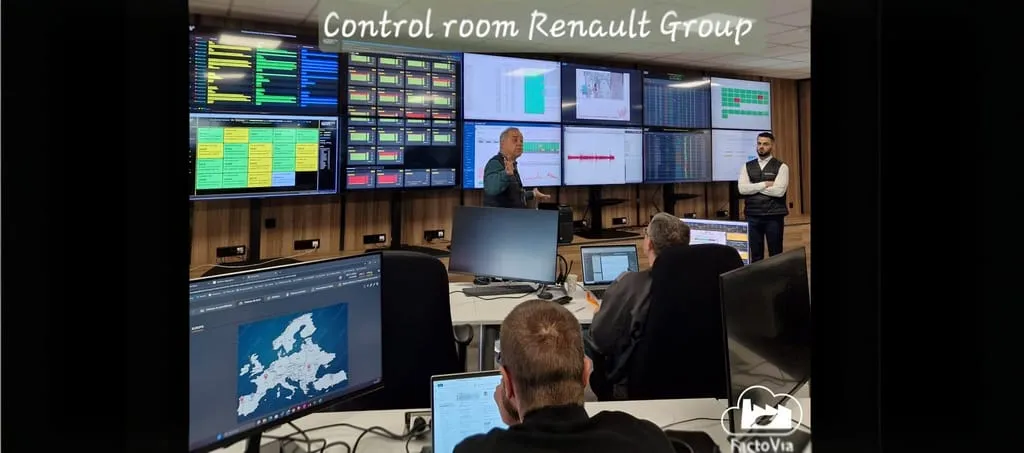
Standards like OPC UA and MQTT have matured to the point where they can serve as the communication backbone for convergence. OPC UA offers robust data modelling and security, while MQTT is lightweight and ideal for sensor data. Many modern PLCs and edge devices support both. Cloud platforms like AWS and Microsoft Azure have industrial IoT offerings that integrate directly with these protocols. But the real value comes from connecting them through a Unified Namespace that abstracts the underlying complexity. That is where consulting expertise like FactoVia's becomes relevant: not to sell a product, but to design the data architecture that makes convergence work in practice.
Looking Ahead
Industrial IoT is moving from pilot projects to production scale. The companies that succeed will be those that treat OT IT convergence as a strategic capability, not a one-time integration. They will invest in a Unified Namespace that grows with their operations, and they will train their teams to think across the traditional boundary. The technology is ready. The protocols are mature. The hard part is the human and organisational shift. But every time I see a plant where real-time data from the floor drives a digital twin that informs a business decision, I am reminded why this convergence matters. It is not about IT versus OT. It is about building a single, intelligent operation out of two historically separate domains.